Gustaf V tennis-club incident
Promise at DawnThe Gustaf V tennis-club incident is a childhood episode in which Romain Gary’s mother confronts the social barrier of a membership fee and demands that her son be allowed to play. The encounter ends with the King of Sweden paying the subscription after watching the boy make a painfully inadequate attempt at tennis. For Gary, the episode binds embarrassment to his mother’s fierce confidence and leaves Sweden associated with an unexpected act of generosity.
The financial barrier and his mother’s intervention
Gary had been given a tennis racquet by the parents of a friend, but membership at the Parc Impérial tennis club cost more than the family could afford. The obstacle was not his ability: he had held a racquet only three or four times. It was the price of entry, and his mother saw that exclusion as intolerable. She stubbed out her cigarette in a saucer, took her cloak and cane, and ordered him to bring the racquet and follow her to the club at once.
The club secretary was summoned, then the president, Garibaldi. In the middle of the room, her hat slightly askew and her cane in hand, she reproached them for letting a trivial matter of money prevent her son from practicing. She presented the possibility that he might become a champion and defend France’s flag against foreigners as a matter of national interest. Her appeal made that patriotic claim despite the fact that Gary was not yet naturalized. In the scene, his mother treats the formal obstacle as minor beside the future she imagines for him.
The club officials are confronted not with a quiet request for assistance but with a public accusation that their decision shows indifference to their country. Gary, meanwhile, is acutely aware of the mismatch between his mother’s certainty and his experience. He fears that the officials will ask him to demonstrate a talent he does not possess. Her confidence has secured attention, but it has also placed him in the path of a test he has no reason to expect he can pass.
The appeal before the King
Garibaldi tries to quiet Gary’s mother by warning her that King Gustav V is nearby and asking her not to make a scandal. The King is taking tea on the lawn beneath a white parasol, dressed in white flannel trousers and a blue-and-black blazer, with his straw boater tilted over one ear. A frequent visitor to the Riviera and its tennis courts, he is already a familiar public figure; his hat regularly appears in local newspapers.
His presence changes the scale of the confrontation. Gary’s mother makes a deep curtsy and appeals directly to the King for justice and protection. She points to the club officials, describes her nearly fourteen-year-old son as exceptionally gifted at lawn tennis, and explains that the family cannot pay because their fortune was seized by the Bolsheviks. This is the explanation she offers in her plea, delivered in the manner of a popular Russian legend. When she finishes, she turns toward the assembled audience in triumph. Her performance has made the family’s hardship and her son’s supposed promise a public matter, leaving Gary exposed to the amusement of the onlookers.
Gustav V responds without visible surprise. He tells his coach to hit a few balls with the boy so that he can see how he plays. The mother’s confidence does not waver at the prospect of this practical test; Gary knows that she believes in him, while he knows how little experience he has. Seeing her expression, he swallows his shame and fear and goes onto the lawn.
The test and the reversal
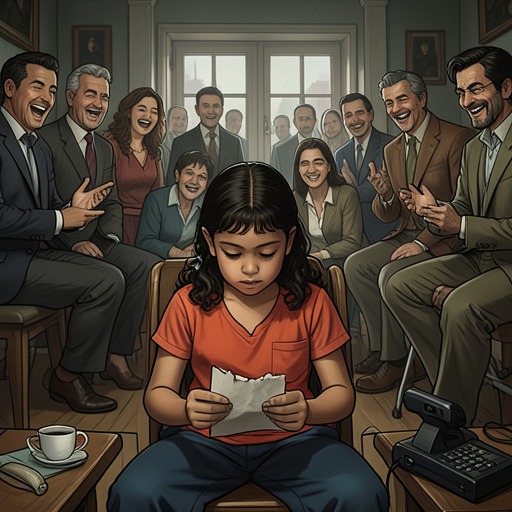
The demonstration is brief. Gary jumps, dives, runs, falls, bounces back up, and spins about in an effort to reach the ball. He manages to touch it once, and then only with the wooden frame of the racquet. The episode turns the champion his mother has announced into a spectacle of incompetence, watched by the imperturbable King beneath his straw hat and by an audience of fashionable guests.
Gary’s recollection connects his decision to play to an earlier lesson in Warsaw. His mother had told him that next time she expected him to be brought home on a stretcher. With that command in mind, he understands that retreat is not an option: for her sake, he is prepared to be the clown as well as the hero. The humiliating performance is therefore also an act of obedience and loyalty. He does not play because he believes his mother’s prediction can be proved on the court; he plays because her faith has made refusal feel impossible.
When the coach finally takes pity on him, his mother welcomes him without treating the failure as disgrace. She helps him put on his pullover and wipes his face and neck with her handkerchief. Her attentive care follows the public ordeal, while her steady gaze turns toward the guests who had watched and mocked him. Their attention falters; the women lower their eyes to their lemonade. The episode moves from the son’s exposure to his mother’s protection, without requiring her to launch the confrontation she seemed ready to make.
The King’s decision and the aftermath
Gustav V intervenes before the tension can deepen. With courtesy, he says that the guests have witnessed something admirable and asks Garibaldi to agree. He offers to pay Gary’s subscription, recognizing courage and determination rather than tennis skill. The decisive change is not that the boy suddenly proves himself a player: his performance has shown the opposite. Instead, the King gives the family the access it could not afford and publicly reframes the failed demonstration as worthy of respect.
Gary remembers the incident through its opposed feelings: the shame of being watched, his mother’s confidence, and the King’s kindness. He says that he has loved Sweden ever since. Yet he never again set foot in the Parc Impérial. The fee was paid, but the public test and its embarrassment remained attached to the club. The ending preserves both sides of the episode: an act of generosity that secures admission, and a humiliation so lasting that admission does not bring him back.